

Turbo Ventilators & Ventilation Systems.
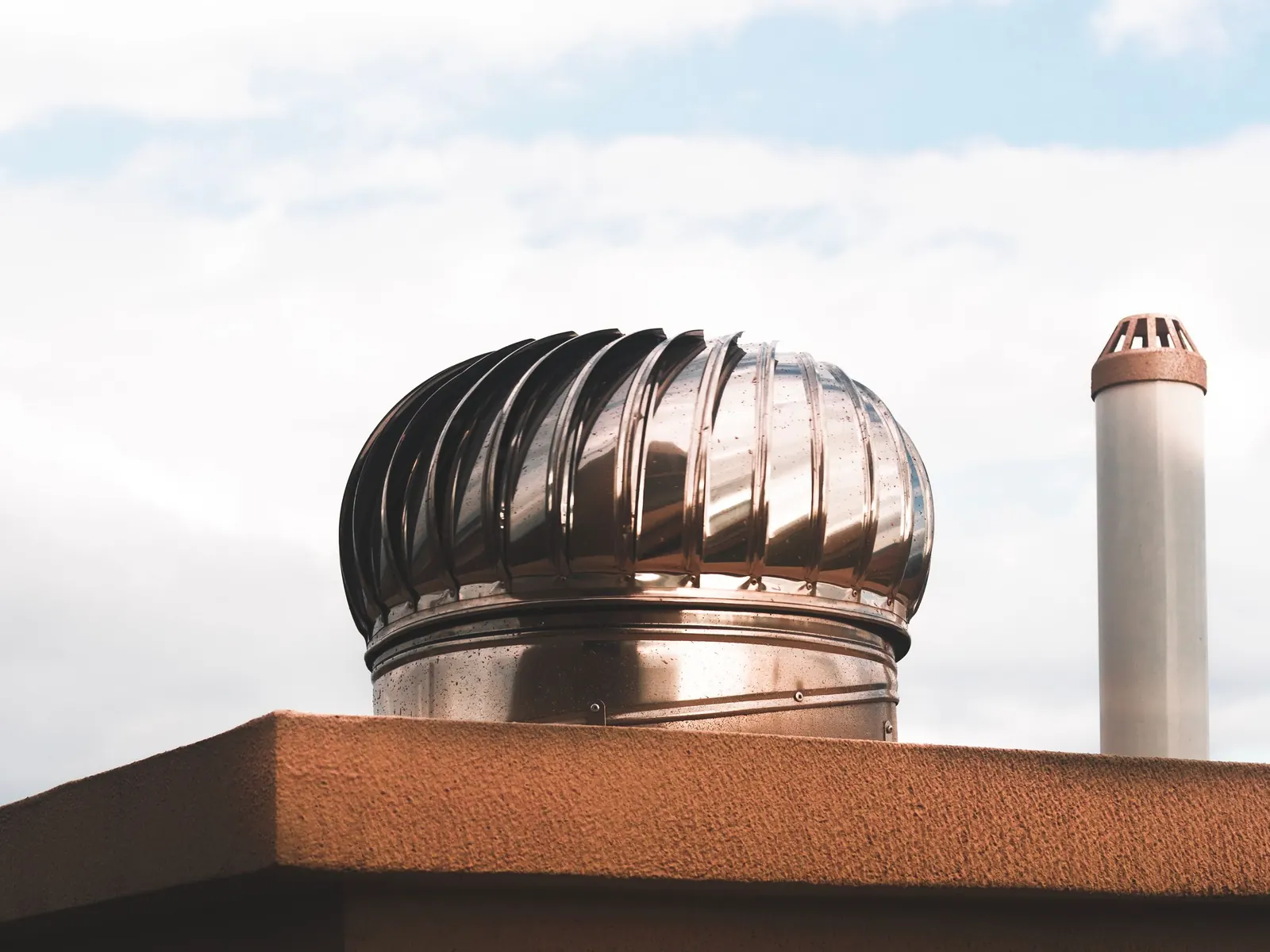
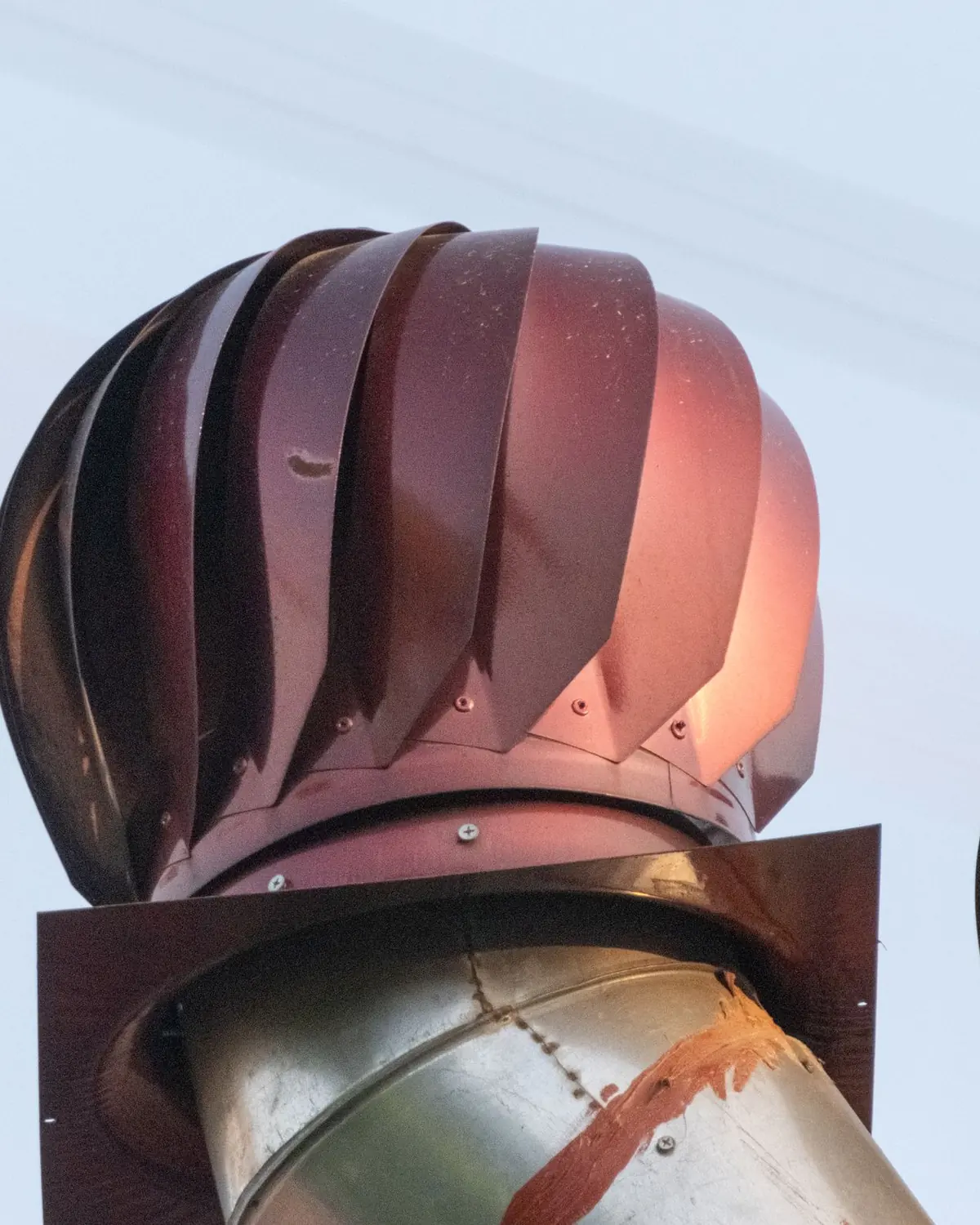
Air ventilators work on centrifugal force created by continuously running vanes. Minimum wind pressure rotates the ventilator on a self-lubricated Teflon cap — hot and polluted air escapes, creating a pressure drop beneath, and fresh cool air immediately enters to fill it.
On this page
Specification
Specified to the micron.
Throat sizes
14" and 24"
365 mm and 610 mm diameter duct.
Wind needed
2 mph
Only 2 mph of wind velocity is required to run.
Warranty
10 years
On the ventilator head.
| Property | Specification |
|---|---|
| Materials | Aluminium and stainless steel |
| Throat sizes | 14" (365 mm) and 24" (610 mm) |
| Base frames | Fibre in UV-stabilised resin, 4 to 20 slope frames |
| Suits | Tile and trafford colour coated sheets, galvalume sheets, other aluminium industrial profiles and asbestos sheets |
| Minimum lapping length | 100 mm, depending on purlin spacing |
| Exhaust capacity | 6500 (per ventilator) |
Moulds are manufactured matching the roof sheet profile to ensure zero short-circulating of air. Refer to the turbo ventilator data sheet for more details.
Sizing
Eight air changes an hour.
A typical warehouse of 25 × 25 × 5 m at 15 km/h wind velocity needs 8 air exchanges per hour: volume × air exchanges ÷ exhaust capacity gives 4 ventilators.
Running cost
No operating cost at all.
Strong, light weight and durable, with no operating cost since it runs on wind power — and no noise, in super silent operation.
Ridge ventilator
Venting at the peak.
A ridge vent is installed at the peak of a sloped roof to let warm, humid air escape. Ridge ventilators control the movement of fresh air through the building, removing hot, stale air and air contaminated by production processes.
Applications
Where it works
- Industrial warehouses
- Metal, asbestos and FRP roofing
- Condensation control in winter
- Protecting stored products from moisture damage


Ready when you are
Size your ventilation.
Give us your shed volume and the air changes you need — we will work out the ventilator count and the throat size.